Employment Lawyers
More Than $300,000,000 Recovered For Employees
Top Rated Lawyers Fighting For Employee’s Rights
More Than $300 Million Recovered For Employees
Top Rated Lawyers Fighting For Employee’s Rights
PRACTICE AREAS
CASE RESULTS
CURRENT CASES
ABOUT SNIDER & ASSOCIATES
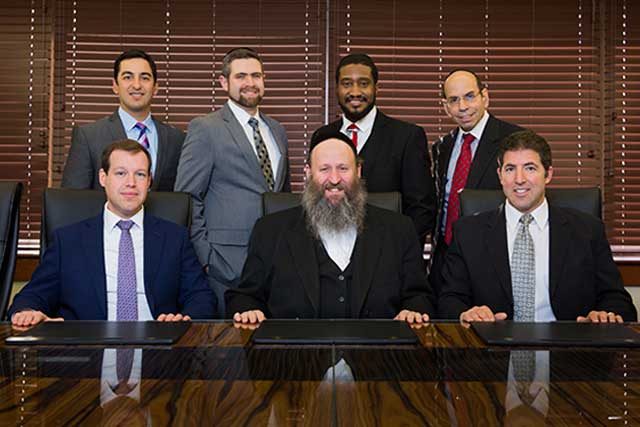
Snider & Associates is a plaintiff and union side labor and employment litigation firm focusing its practice on the representation of Federal Sector employees and unions across the United States. Founded by Michael J. Snider in 2005, the firm has recovered in excess of three hundred million dollars on behalf of employees in all types of employment disputes, including wrongful termination and other disciplinary actions, discrimination, and overtime and unpaid wage matters.
In addition to litigation services, the firm provides counsel, trainings, and advice to federal sector unions and their bargaining unit employees on all areas of federal sector labor and employment law including labor relations.
Recognized as a leader in the industry, the firm provides personal attention and aggressive legal representation for both individual plaintiffs and classes comprised of thousands of employees.
TESTIMONIALS
For more than a decade, the representation provided by Snider and Associates has been nothing less than excellent for our bargaining unit employees and for our Local. They have been and will remain our “go to” legal experts in Labor disputes as they have established an extensive record of getting results, taking some of the most difficult cases and delivering outcomes that have had extremely positive impacts for thousands of our Members.
Our records demonstrate that, over the past ten years, the firm has a 90% success rate in prevailing in Arbitration Hearings for our Bargaining Unit Employees and Local Officers, in cases such has removals and official time disputes. The attorneys at the firm are knowledgeable, accessible, professional, and eager to provide top-notch service to Locals that are pursuing justice in the workplace for their members. I high recommend and strongly encourage the use of the services provided by Snider and Associates.
Our Union Local, AFGE Local 2923, for many years has actively and relentlessly pursued fairness and justice in the workplace. So, our employees have come to recognize us as a champion of worker’s rights and protections. But they have also come to recognize another champion – Snider and Associates. Even though our Local has had a large number of successes, Snider and Associates have been our legal counsel during some of the greatest triumphs in our Local’s history.
I find that our Local has been extremely fortunate that Mike Snider worked with us years ago. His staff of attorneys is highly capable and accomplished experts in the field of labor relations. They are both professional and welcoming. I have discovered that they are genuinely interested in the best interests of our Local and employees we represent. They have graciously taken their time to answer questions and deliberate with me regarding a host of issues, and in all those interactions I’ve usually learned something and most certainly been treated with respect. Anyone who has the prospect to work with Snider and Associates should seize the opportunity.
AFGE Local 1534 strongly recommends Snider & Associates, LLC without reservation. Their team will be a strong and worthy addition to your Local; the results are without question.
As a fledgling Union that was resurrected within the last ten years, I inherited many challenges and many situations that far exceeded the capacity of the accumulated knowledge of the AFGE Local 3313’s volunteer Union Officials. The skill/knowledge gap has been closed through the use of the professional expertise from the Law Offices of Snider & Associates, LLC.
Past President Shelia Wilson pushed that the Local secure the services of Snider & Associates and her recommendation continues to bear great dividends. During my first year as President of AFGE Local 3313, Snider and Associates has provided incredible support which has resulted in saving the jobs of employees scheduled for removal, reducing the suspensions of other employees, facilitating back pay deliberations resulting in settlements, and providing an amazing level of consultation support for matters dealing with changes in working conditions and the development and submission of numerous grievances.
In my opinion, the increases in membership and confidence in our Local can be directly attributed to the outstanding support we receive from Jacob, Jason, Keith, and others from Snider and Associates.
Outstanding does not begin to properly describe the services receive from the Firm specifically, that of Mr. Jacob Statman. Mr. Statman has been one of the greatest assets I’ve known in my 12 years of serving as 1st Vice President. From actually handling cases to being available on the whim of a phone call, he has always taken the time to explain thoroughly the issues I’ve faced as well as solutions to that issue.
The effect of the Snider & Associates’ team representing Department of State bargaining unit employees has resonated throughout the Agency. If you are considering utilizing Snider & Associates, my advice to you, is don’t delay another day. From day one of having them on your team, believe me, you will feel a great deal of stress lifted for your workload. I have no doubt, you will have success while working with Snider & Associates, LLC.
The definitive moment in pursuing my EEO claim was retaining Snider and Associates Federal Employee Law Firm.
This is the premier law firm in the United States for representation against the Federal Government. I interviewed several fed employee law firms around the county, none had as much legal knowledge pertaining to federal employment law as Snider and Associates.
Their lawyers are experienced, professional, absolutely know Federal Law, and got the job done right the first time. I expected 100% but received 1000% in advice, federal employment knowledge, EEO expression of rights and legal representation.
Words cannot express my high opinion of their work ethic and treatment as a client. Retaining Snider and Associates is having the most aggressive, knowledgeable, most respectful attorneys on your side. There is not a better federal employment law firm in this country.
They gave me excellent advice, represented me with their top gun lawyer (Mr. Jason Weisbrot), treated me like a valued client, respected my opinions and won my case. Thank you!
RECENT BLOG POSTS
Federal Employment Discrimination: How to Fight Back
It can be disheartening to feel like your workplace environment is hostile or uncomfortable because of discriminatory behavior by [...]
Can You Sue for Unpaid Wages?
One of the worst ways an employer can mistreat an employee at work is to not pay them the amount [...]

Can My Employer Fire Me for Talking to a Lawyer?
Your workplace environment should feel comfortable and safe, even if you don’t enjoy being at work every day. You [...]